BRIMS Heritage Resource Centre
Why We Initiated the Project
BRIMS Heritage Resource Centre was established in response to the rapid disappearance of Uganda’s scientific, technological, and industrial heritage. Valuable machines, tools, communication equipment, household technologies, and other historical objects were increasingly being discarded as waste or sold for scrap, resulting in the irreversible loss of important evidence of the country’s technological evolution.
At the same time, schools lacked authentic historical resources that could support Uganda’s Competency-Based Curriculum through practical learning. We envisioned a community-based heritage centre that would rescue endangered collections, preserve them, and transform them into educational resources. The project demonstrates that obsolete technologies are not waste but valuable cultural assets that inspire innovation, environmental responsibility, and appreciation of our collective history.
How the Project Was Implemented
Working closely with collectors, artisans, schools, families, volunteers, and community members, BRIMS identifies, rescues, restores, documents, and conserves heritage objects at risk of destruction. More than half of the collections have been recovered from scrap dealers or disposal sites.
Every artifact undergoes research, conservation, cataloguing, and interpretation before being incorporated into exhibitions, guided tours, outreach programmes, and curriculum-based learning activities. Interactive demonstrations and storytelling enable visitors to understand the evolution of science, technology, transport, communication, agriculture, and everyday life while promoting environmental sustainability through the reuse and preservation of historical objects.
Outputs and Results
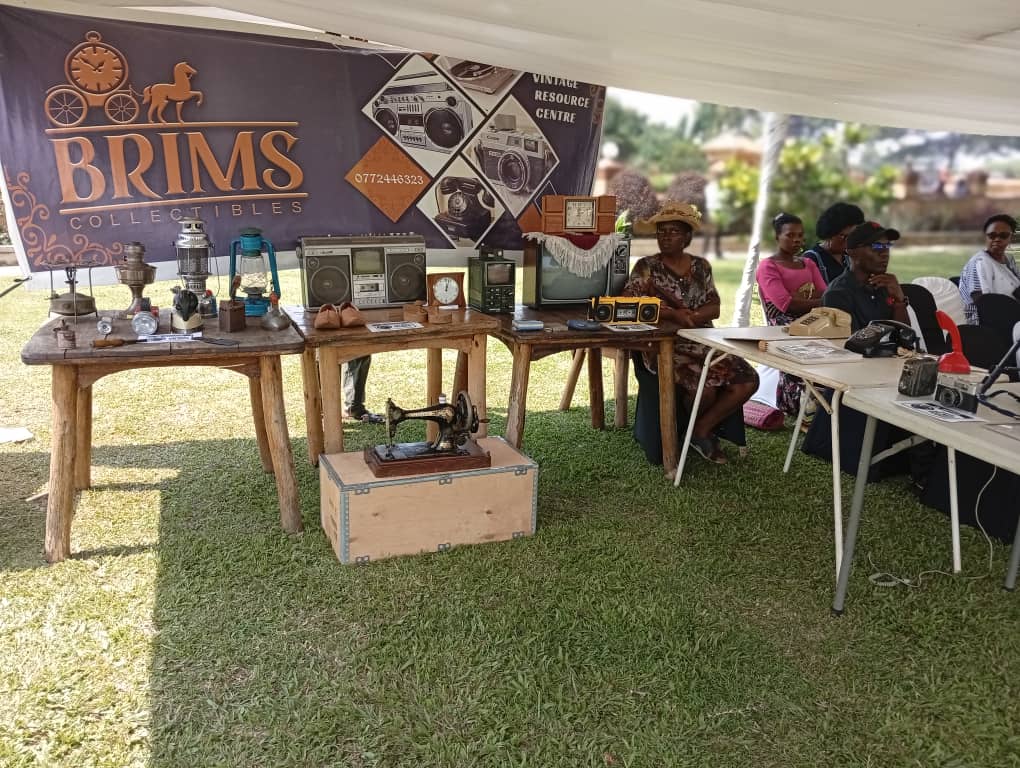
BRIMS has developed a living Heritage Resource Centre that functions as both a museum and an educational laboratory. The Centre currently preserves over 10,000 heritage objects, including automobiles, scientific instruments, communication and entertainment equipment, industrial and agricultural implements, household technologies, and archival materials.
Through the “Museum of vintage wheels” innovation, the project has organized 10 educational exhibitions, 5 school based learning programmes, and more than 20 community outreach events aligned with Uganda’s Competency Based Curriculum and tourism promotion. The Centre also serves as a knowledge sharing platform for teachers, students, artisans, collectors, and museum professionals.
Impact
The project has directly reached over 30,000 learners, 100 teachers, 30 schools, and approximately 50,000 members of the publicthrough exhibitions and outreach programmes. More than 8,000 heritage objects have been rescued from destruction, preserving an important part of Uganda’s scientific and technological history.
Beyond strengthening classroom learning through hands on experiences, BRIMS has built partnerships with schools, museums, collectors, community organizations, and cultural institutions, creating a growing network committed to heritage preservation. The Centre has also demonstrated that discarded materials can become valuable educational and cultural resources, promoting environmental stewardship and sustainable development.
An additional impact has been the Centre’s contribution to Uganda’s creative and film industries. Its authentic vintage vehicles, historical machinery, communication equipment, and period artifacts provide filmmakers with historically accurate props and set dressing, enabling culturally authentic storytelling while supporting both heritage conservation and the country’s growing film sector.
BRIMS demonstrates that community led museums can successfully combine heritage preservation, education, environmental conservation, tourism, and creative industries to ensure that the past continues to inspire future generations.